Loading
Just a moment…
Loading
Just a moment…
This is the first page of a year-long story, and it begins at the beginning. By the end of this lesson you will be able to tell how the world began: who made it, how He made it, what He said about it, and how the first week ended. You will know one line by heart — God spoke, and the world was made. God saw that it was good.
Open Genesis 1:1–2:3 in your family Bible and read it aloud. Read slowly. This chapter is built to be heard: it repeats itself on purpose, the way a song returns to its refrain. Listen for the lines that come back again and again — God speaking, the world answering, God seeing that what He made was good, evening and morning closing each day. If you catch the rhythm of the chapter, you have already learned half of what it teaches.
This lesson does not print its own wording of the Bible in place of yours. The named reading is Genesis 1:1–2:3, and your family Bible is the text.
Before you read, set two questions in your mind, and ask them again when the reading is done.
All year the question is the same: who is God, and what did He do? The text does not hand you a year number. It says that this happened in the beginning, and this lesson leaves it there.
Say this line out loud twice now, and once more at the end of the lesson:
God spoke, and the world was made. God saw that it was good.
It has two halves. The first half tells how the world came to be. The second half tells what God thought of it. Learn it word for word — both halves are asked for below.
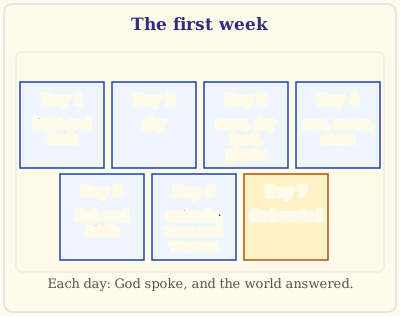
At the very start of everything, God made it all — the sky above, the ground below, and every space between. Before there was anything else — before light, before land, before a single living thing — there was God. The earth at first was unformed and unfilled, dark, with deep waters over everything.
Then God spoke — the first words the text records Him saying. He called for light, and light came. He saw that the light was good, and He set light and darkness apart from one another, and He gave them names: Day and Night. Evening came, and morning came — the first day.
So the week began, and each day went the same way: God spoke, and the world answered.
On the second day He made the sky, setting it between the waters above and the waters below. On the third day He gathered the seas into their places so that dry land appeared, and then the land itself turned green at His word — plants bearing seed, trees bearing fruit, each one after its kind, carrying inside itself the start of the next one. And God saw that it was good.
On the fourth day He hung lights in the sky — a bright one to carry the daytime, a smaller one for the night, and the stars beyond them both — to divide day from night and to mark out the seasons and the years.
On the fifth day the waters swarmed with living creatures and birds flew across the sky, and God blessed them and told them to multiply and fill the sea and the air. On the sixth day the land brought forth its animals, wild and tame, small and great, each after its kind.
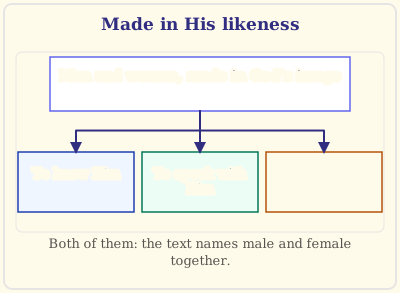
Then the story slows down, because something different is about to be made. God announced that He would make human beings to bear His own likeness — and He did. Man and woman alike were made that way; the text names the two of them together, in one breath, both carrying God's image.
He blessed them and gave them work: they were to have families, settle the whole earth, and hold charge over the fish and the birds and every living thing. The green plants were theirs for food. And when God looked at everything He had made — all of it together — He saw that it was very good.
On the seventh day, God rested; the making was over. Not because He was tired — because the work was finished. He blessed the seventh day and set it apart, and with that rest the first week of the world was complete.
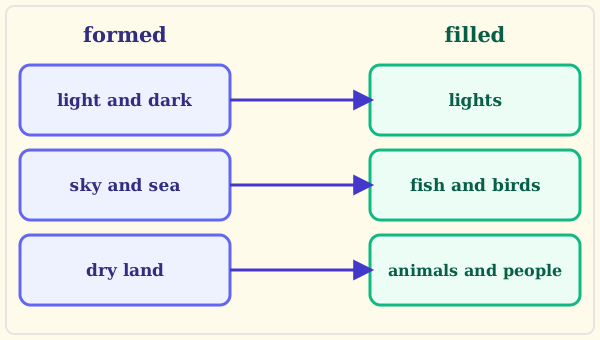
The week has a shape. In the first three days God formed the places: light and dark, sky and sea, dry land. In the next three days He filled them: lights for the sky He had divided, fish and birds for the sea and air He had opened, animals and people for the land He had raised. Forming, then filling.
Genesis doesn't use form and fill as a label for the week; it's a name readers give the pattern. The chapter comes close, though: verse 2 says the earth was without form (some Bibles say formless), and in verse 22 God tells the sea creatures to fill the waters. The point is that the world is not an accident piled up in a corner. It is ordered, like a house built and then furnished.
The refrain grows. Day after day, God sees that what He made is good. After man and woman are made, the verdict rises: very good. Goodness is not your opinion about the world; it is God's own spoken judgment of His own work.
One God, no struggle. Read Genesis 1 for what is absent from it: no rival, no second power, no battle that has to be won before the world can begin. God speaks, and it is so. Nothing in the chapter is contested; nothing resists Him. Say only what the chapter says: one God, speaking, unopposed.
Of everything in the six days, only man and woman are made in God's image — made to know Him, to speak with Him, and to care for what He made as His stewards. Both of them: the text names male and female together in the same breath.
A steward is someone put in charge of something that belongs to another. That is the work God gave: to hold charge over the fish, the birds, and every living thing, on behalf of the One who made them.
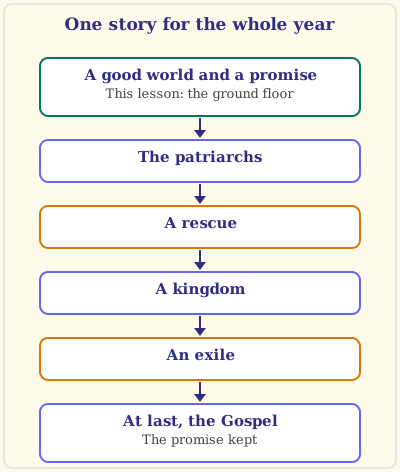
The whole year traces one story: God makes a world and a promise, and then He keeps that promise through patriarchs, a rescue, a kingdom, an exile, and at last the Gospel. That story only makes sense if the world began good.
In the next lesson you meet the Fall — and the Fall weighs what it weighs precisely because something good was broken. Keep this lesson bright. It is the ground floor of everything that follows.
Close the page and tell the story back to yourself in four sentences. Use this shape:
Say it out loud. Then say the line once more: God spoke, and the world was made. God saw that it was good. The questions below check the same four things, so tell it first and answer after.
You might be tempted to read this as a second history timeline. Don't — history places events on a line, but here you are listening to what Genesis says God did.
You might be tempted to argue about how old the earth is. Don't — this lesson teaches what the text says: in the beginning, God made. The text gives no year number.
You might be tempted to recite the days as a memory stunt and stop there. Don't — naming the days in order is fine work, but always ask the follow-up: who acted on every one of them, and what did He say about it?
You might be tempted to think "image of God" means God has a body like ours. Don't — the working definition is that people are made to know and represent God. It is about what people are for, not what God looks like.
You might be tempted to treat the seventh day as tiredness. Don't — God rested because the work was finished. Rest here is completion and blessing, not exhaustion.
| Term | Working definition |
|---|---|
| create | To make; here, God making the world. |
| image of God | People are made to know and represent God. |
| Sabbath rest | God rested on the seventh day from His work of making — finished, blessed, set apart. |
| good | God's own spoken verdict on what He made — and very good once man and woman were made. |
| after its kind | The text's phrase for each plant and creature carrying the start of the next of its own sort. |
| form and fill | A name for the shape of the week: days 1–3 form the places, days 4–6 fill them. |
Say each term out loud, then use it in one sentence about this lesson's story.