Loading
Just a moment…
Loading
Just a moment…
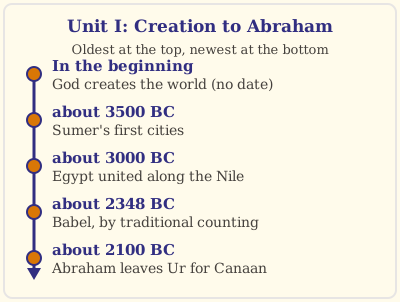
This year you will follow one true story, from the very beginning of the world to the fall of ancient Rome: real people, in real places, at real times. You need two small tools first, a timeline and the labels BC and AD. This lesson gives you both tools; in Part 2, the story begins.
A timeline is a picture-line of time: the oldest events on one end, the newest on the other, laid out in the order they happened. Look at a timeline and you can see, at a glance, what happened first, what happened next, and how long ago — or how far apart — two events were.
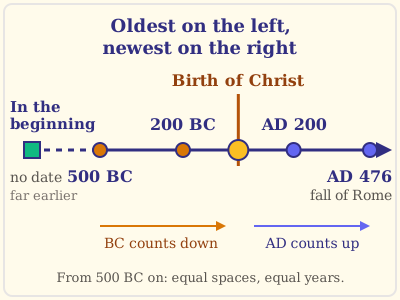
This year you will fill in one long timeline, from the beginning of the world to the fall of ancient Rome, adding one new piece each week and saying it aloud until you know the whole story in order.
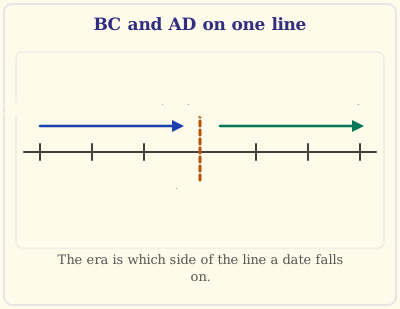
Every date this year carries one of two labels. BC means “Before Christ”: the years before Jesus was born. AD is short for the Latin Anno Domini, “in the year of our Lord”: the years after.
BC years count down toward His birth, so the bigger BC number is further back: 500 BC comes before 200 BC. AD years count up away from it, so the smaller AD number is earlier: AD 200 comes before AD 500. Every BC date comes before every AD date, whatever the numbers. This course writes BC after the year (“753 BC”) and AD before it (“AD 476”).
Which comes first, AD 50 or AD 400? AD counts up, so the smaller number, AD 50, is earlier. Which comes first, 900 BC or 400 BC? BC counts down, so the bigger number, 900 BC, is further back. The two rules point opposite ways: for BC, bigger is earlier; for AD, smaller is earlier.
Three traps to watch for. AD does not mean “after death”: it counts from Christ's birth. This course never uses BCE or CE: always BC and AD. And do not give the beginning of the world a year: the timeline starts at “In the beginning,” with no number, on purpose. Part 2 shows you why.
Read this out loud, twice:
“History is the true story of people, places, and times before our own. Years before the birth of Jesus Christ are called BC — before Christ — and they count downward toward His birth. Years after are called AD — anno Domini, in the year of our Lord — and they count upward to today. So 500 BC comes before 200 BC, and AD 200 comes before AD 500.”
Then close the page and say it again from memory: which way do BC years count, and which way do AD years count?
| Term | Working definition |
|---|---|
| history | The true story of real people, in real places, at real times, told in order. |
| timeline | A picture-line of time, oldest to newest, showing what happened first, next, and how far apart. |
| BC | "Before Christ" — years before Jesus was born, counting downward toward His birth. |
| AD | Latin Anno Domini, "in the year of the Lord" — years after Jesus was born, counting upward. |
| era | Which side of the BC/AD line a date falls on. |
Say each term out loud, then use it in one sentence about a date you know.